Field Research
THE HOLY, THE HORSEPOWER & THE CLOWN.
Field notes from Posse, Goiás: a religious procession, a horseback battle between Moors and Christians, and a lowered car with the bass turned all the way up.


POSSE, GOIÁS, BRAZIL
In Posse, Goiás, history does not stay in the past.
I got there on May 24th, for the feast of the Holy Spirit.
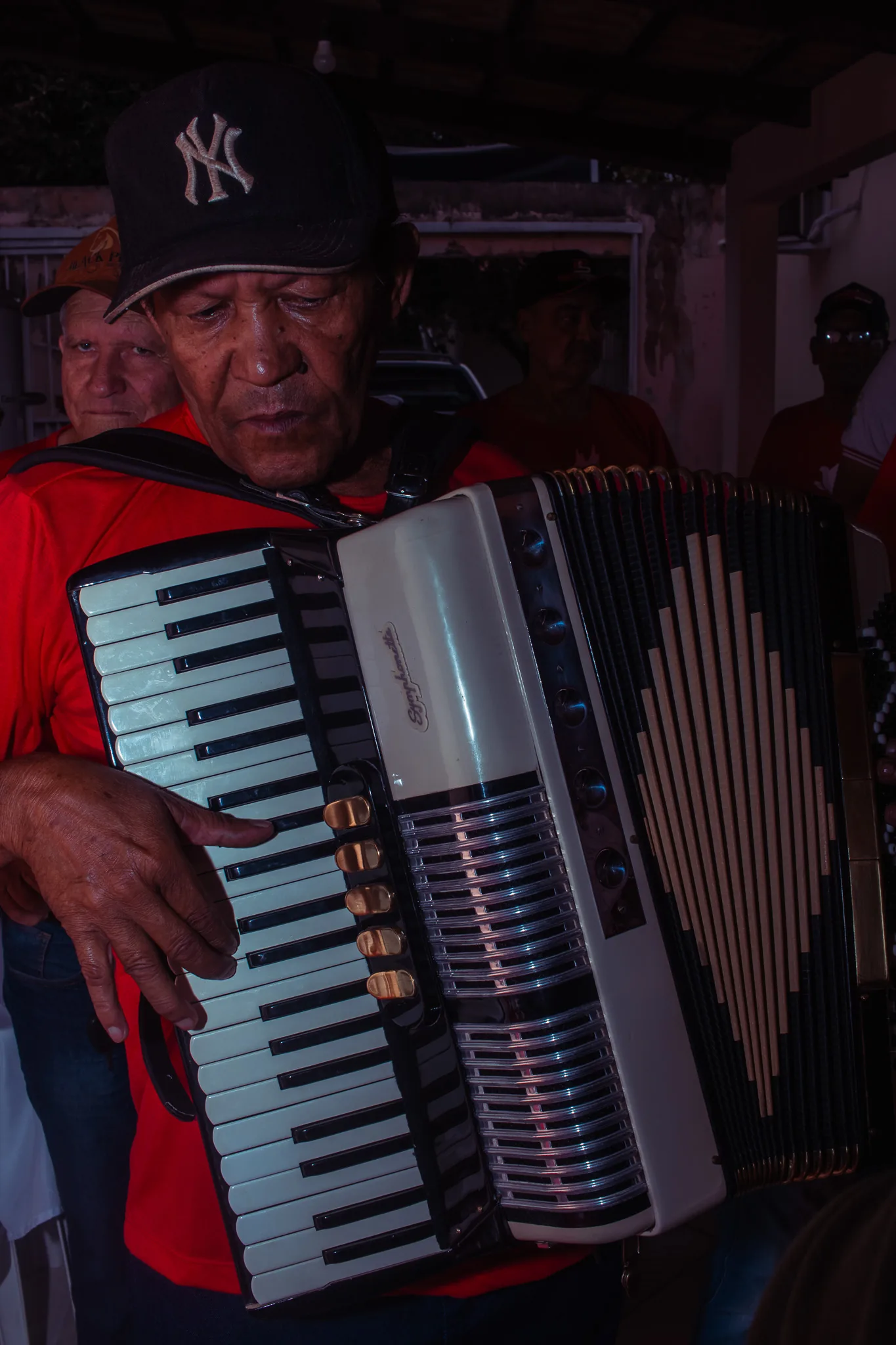
Family invite. My cousin was a folião, one of the people who put the Folia do Divino together.
The first impression is religious.
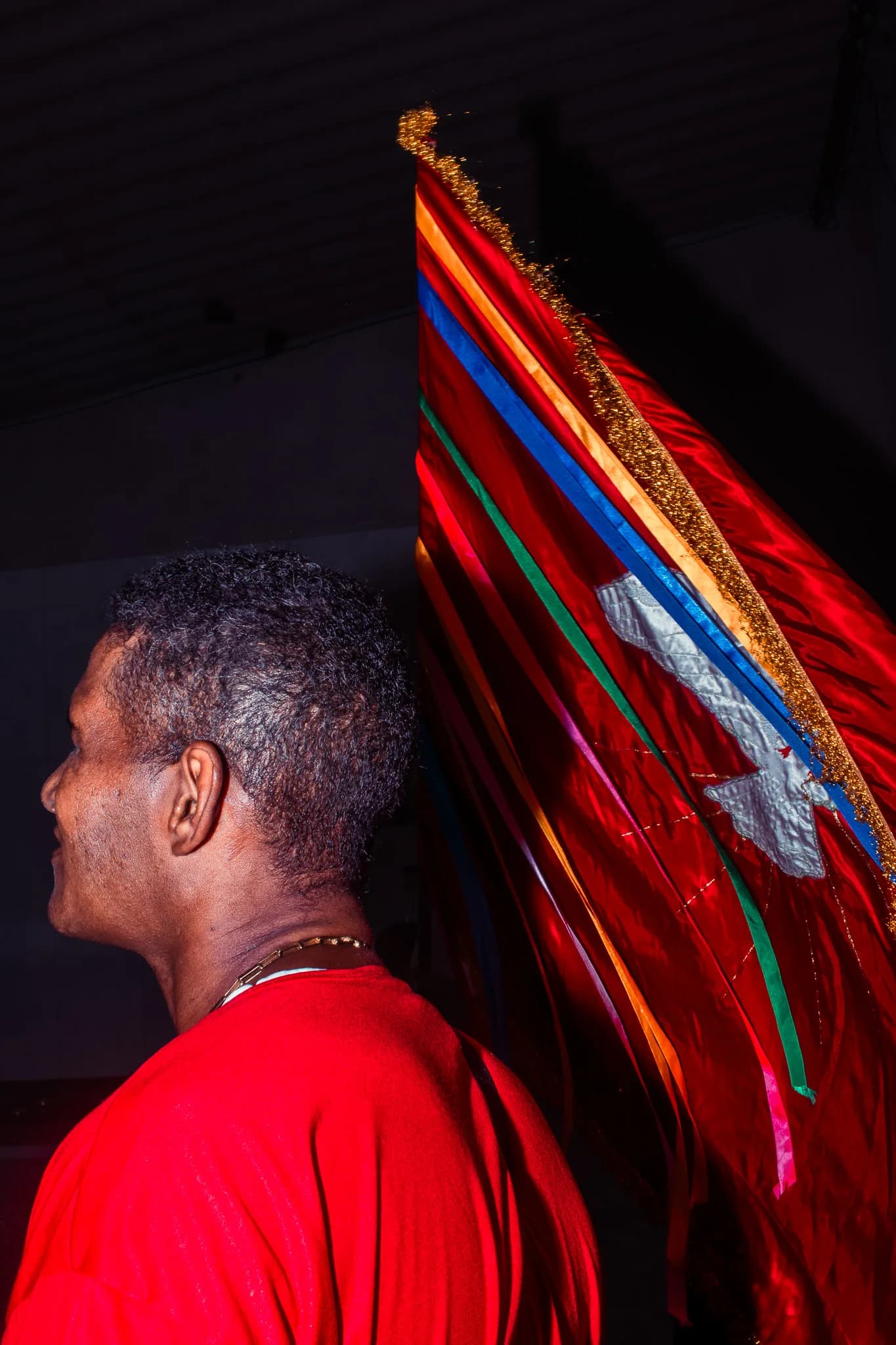
Groups walk the city carrying a flag with the Holy Spirit on it, a white dove.
People open the house. They sing, they pray, they visit.
Faith, community, repetition. It crosses generations because the generations keep doing it.
But Posse does not end at prayer.
A few days later, the city changes scale.
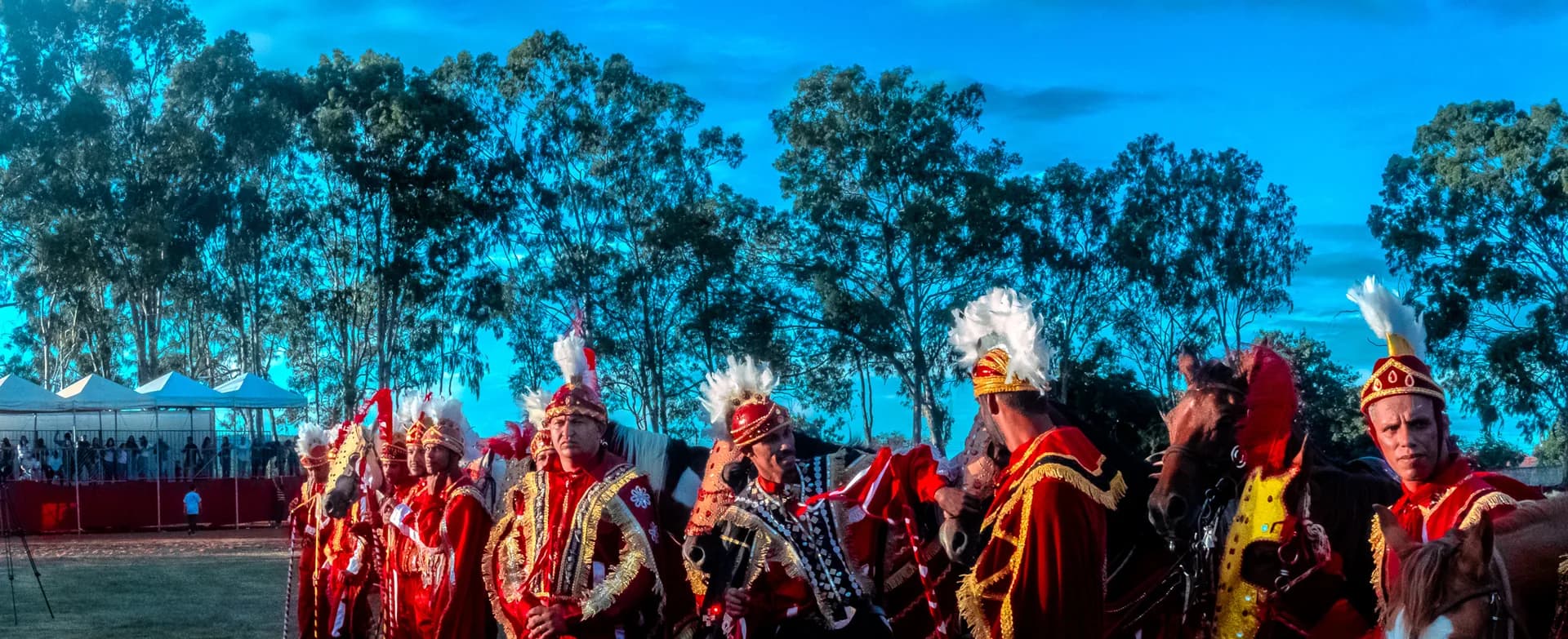
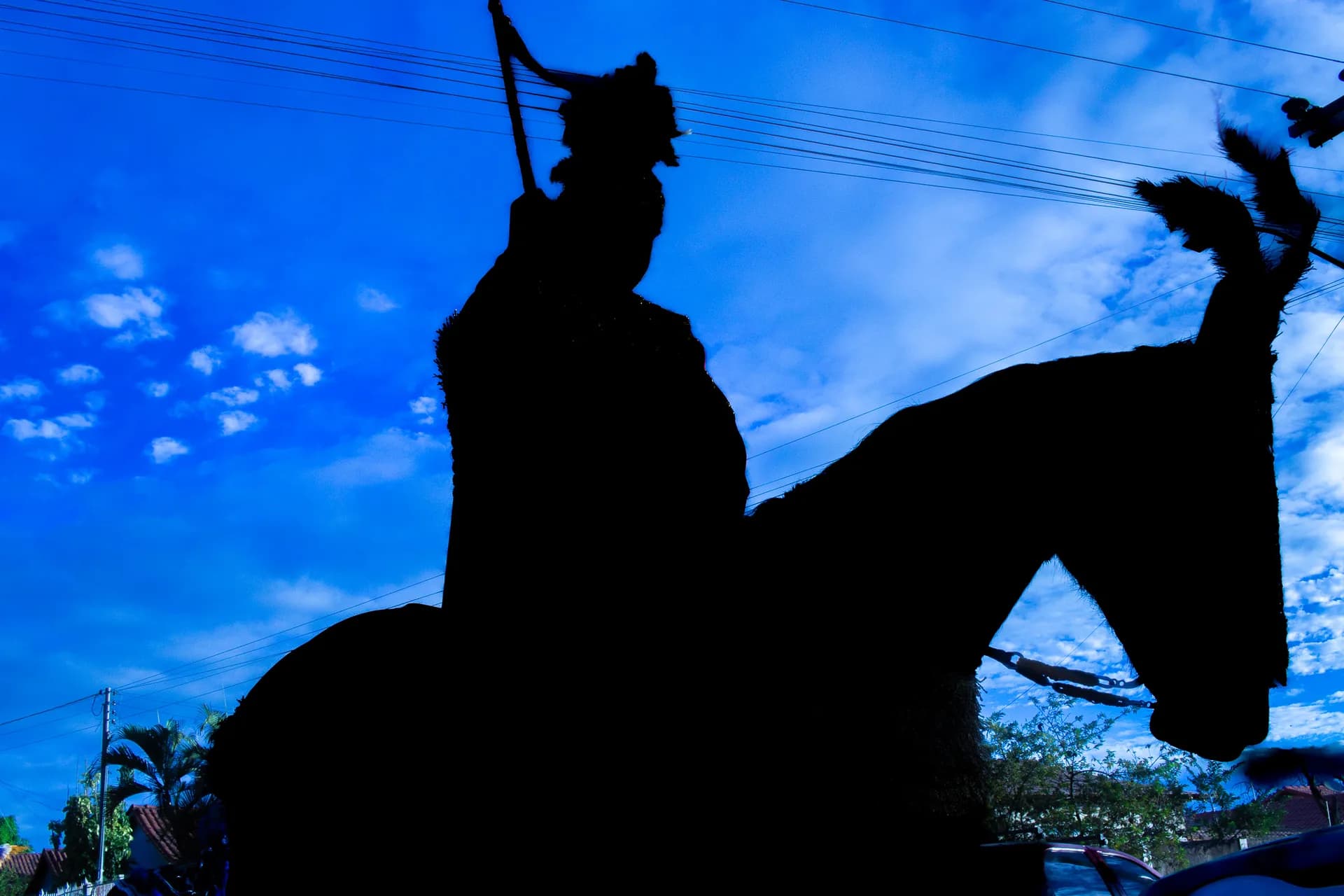
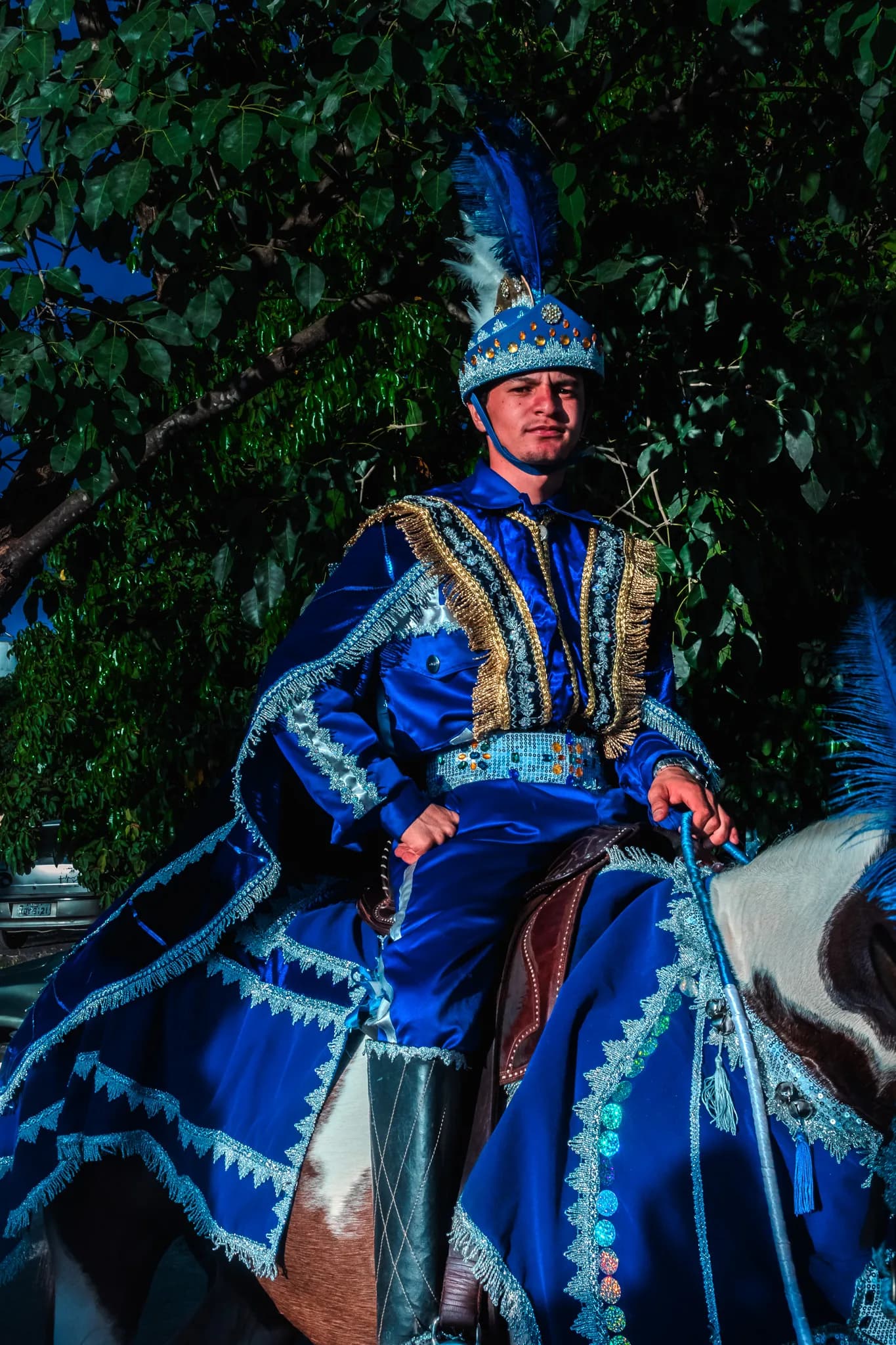
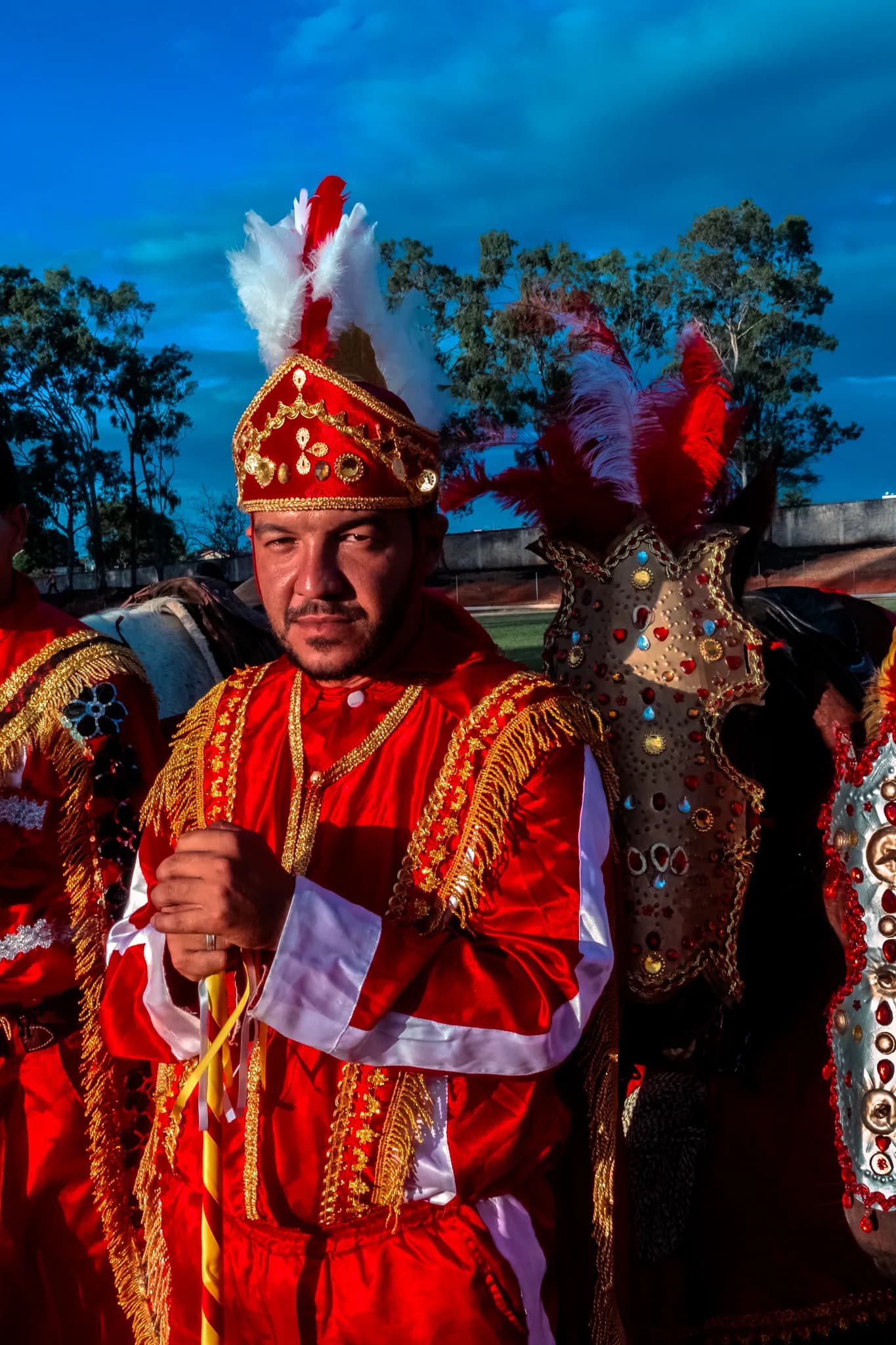
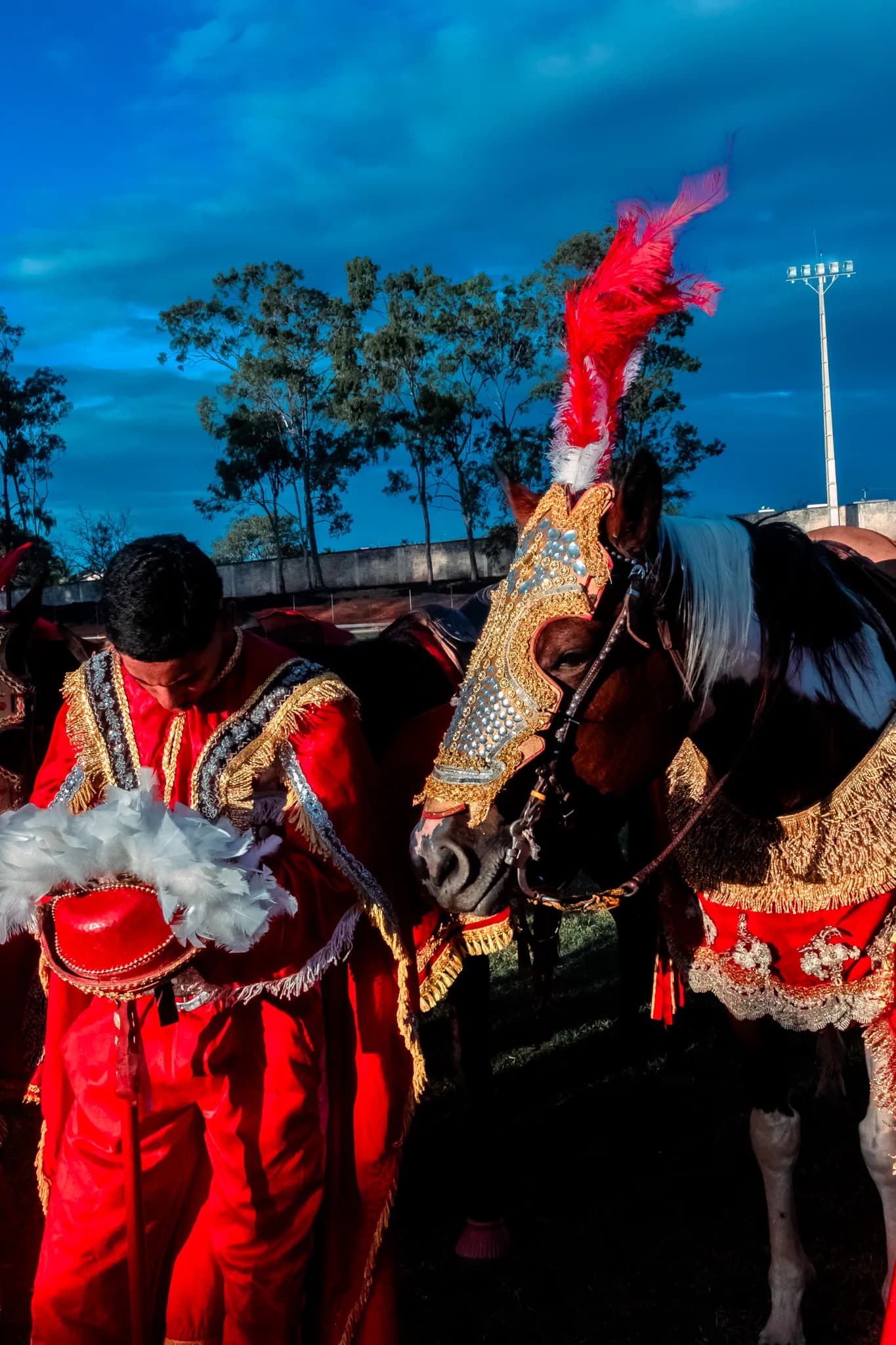
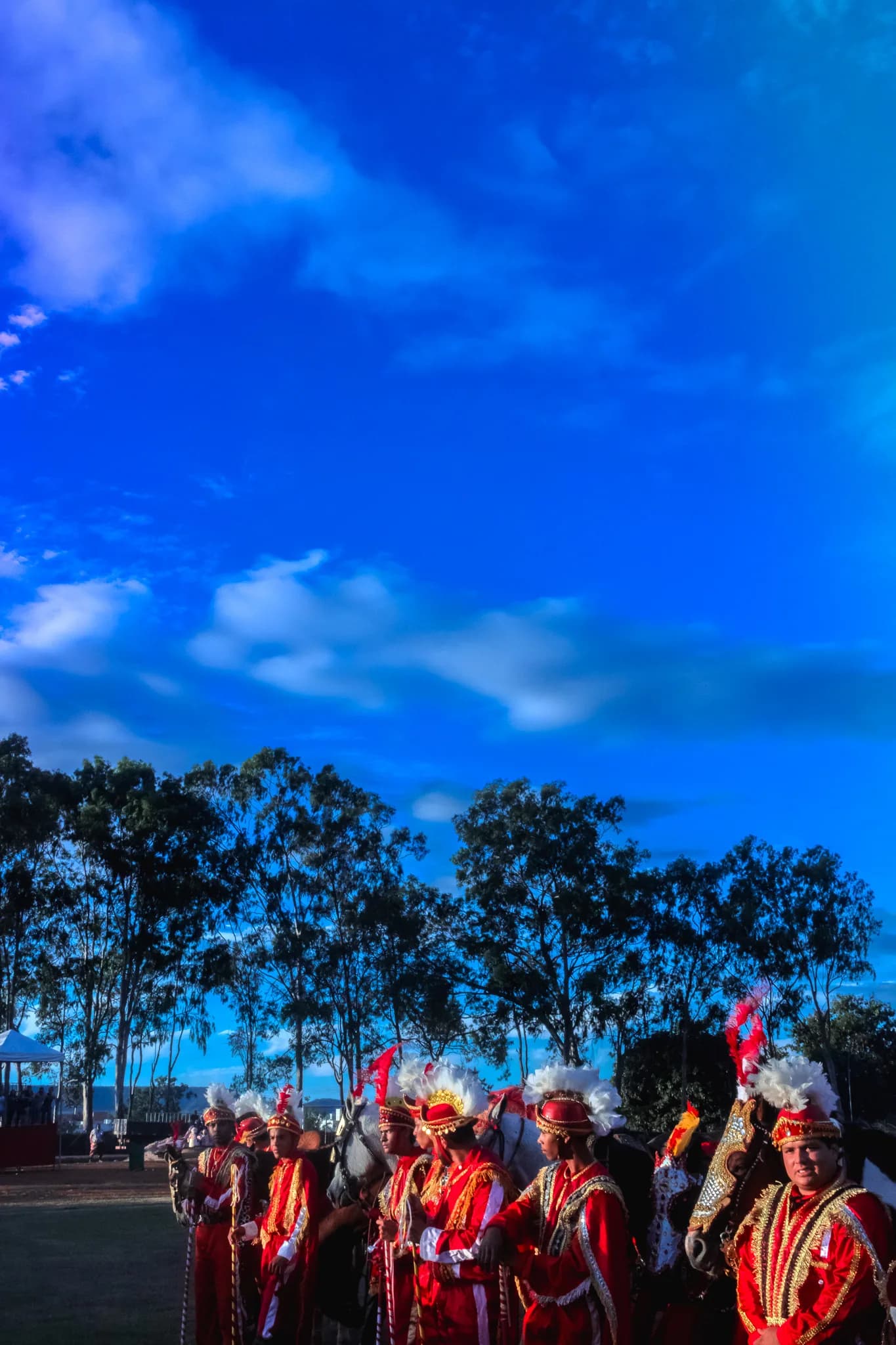
The house visit turns into spectacle. The field fills with horses, characters, costumes, choreography.
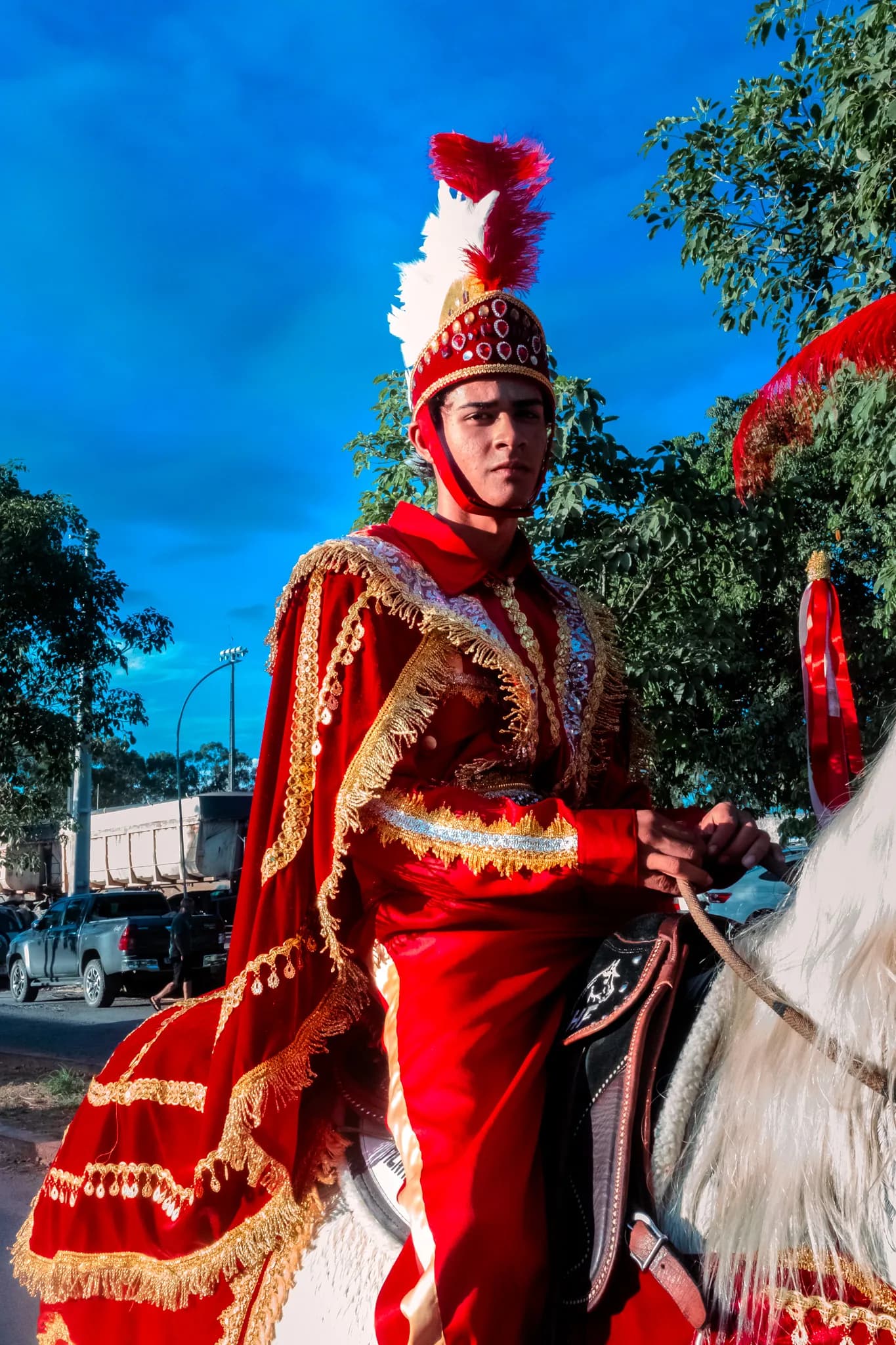
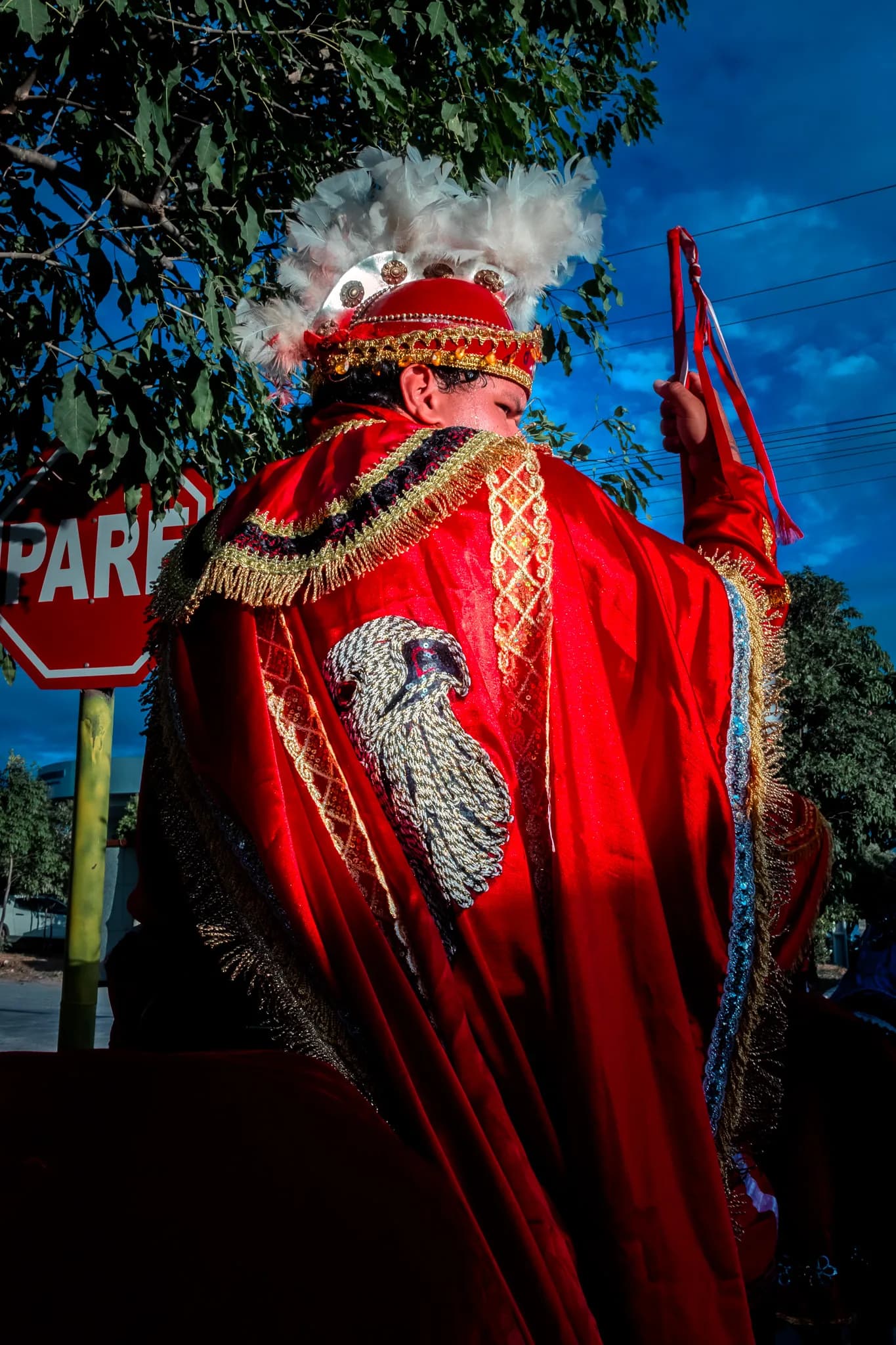
History comes in through the Cavalhadas, the staged battle between Moors and Christians, European in origin and long since absorbed into Brazil.
For a minute it passes for a historical play.
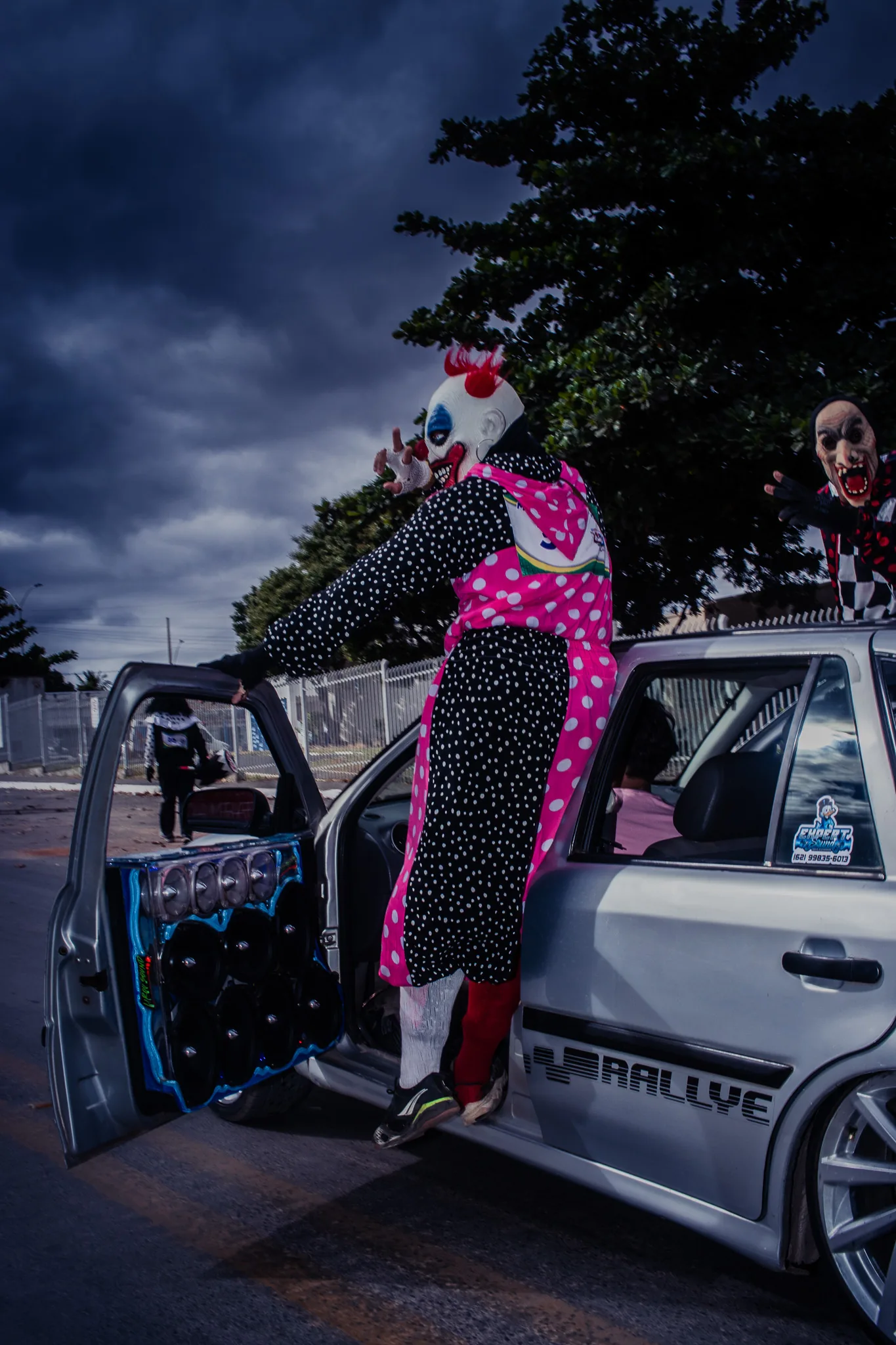
Until a lowered car shows up.
And the bass gets there before the car does.
Chapter 1
Something curious is going on in Posse.
Tradition here is not being preserved.
It is being produced.
Months of preparation. Organizers, money, infrastructure, communication, sponsors, city hall.
What could be community memory alone is also a production.
The past needs production.
Tradition needs logistics.
Heritage needs a budget.
And on the day of the feast, all of it disappears behind the spectacle.
Chapter 2
That is where the characters come in.
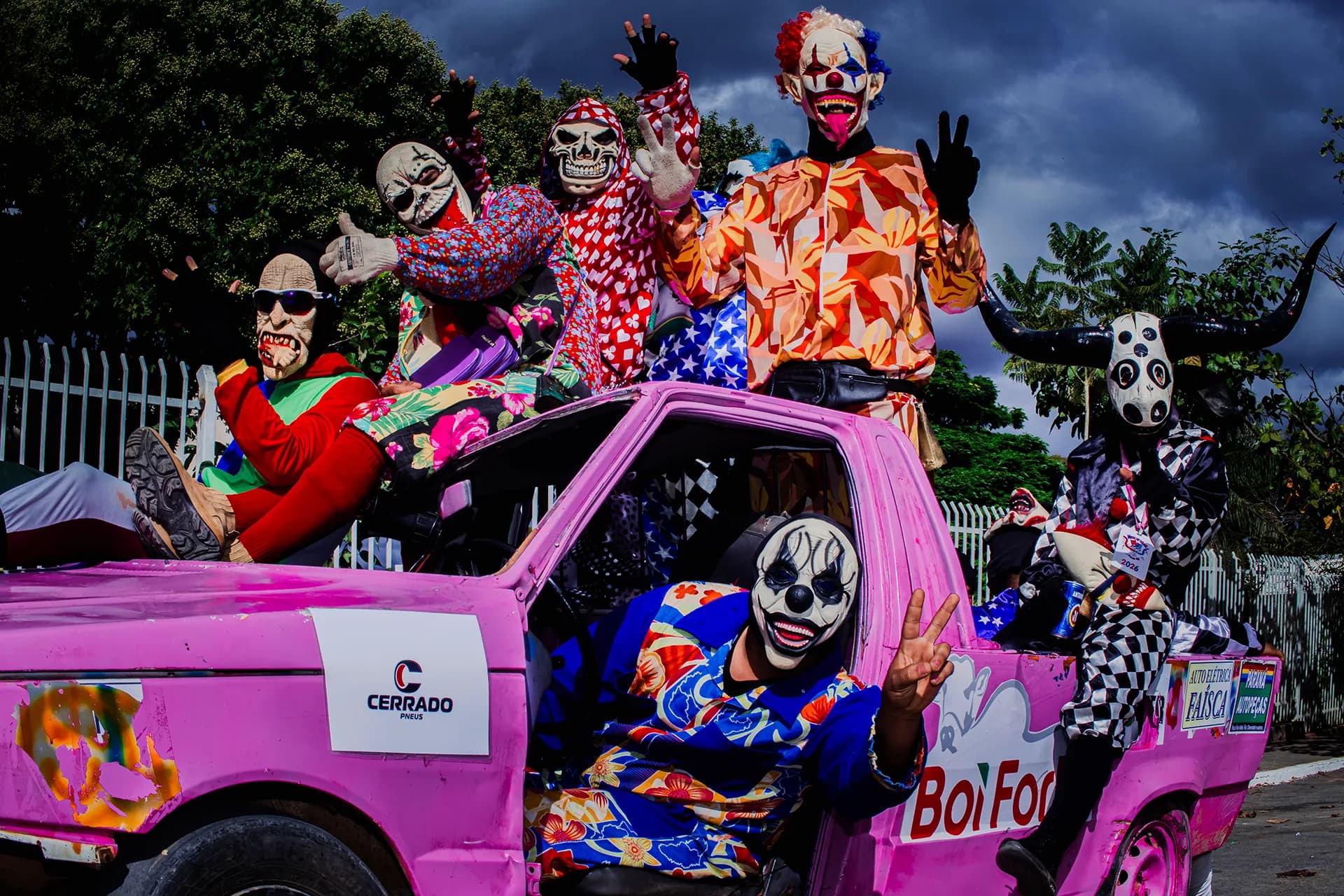
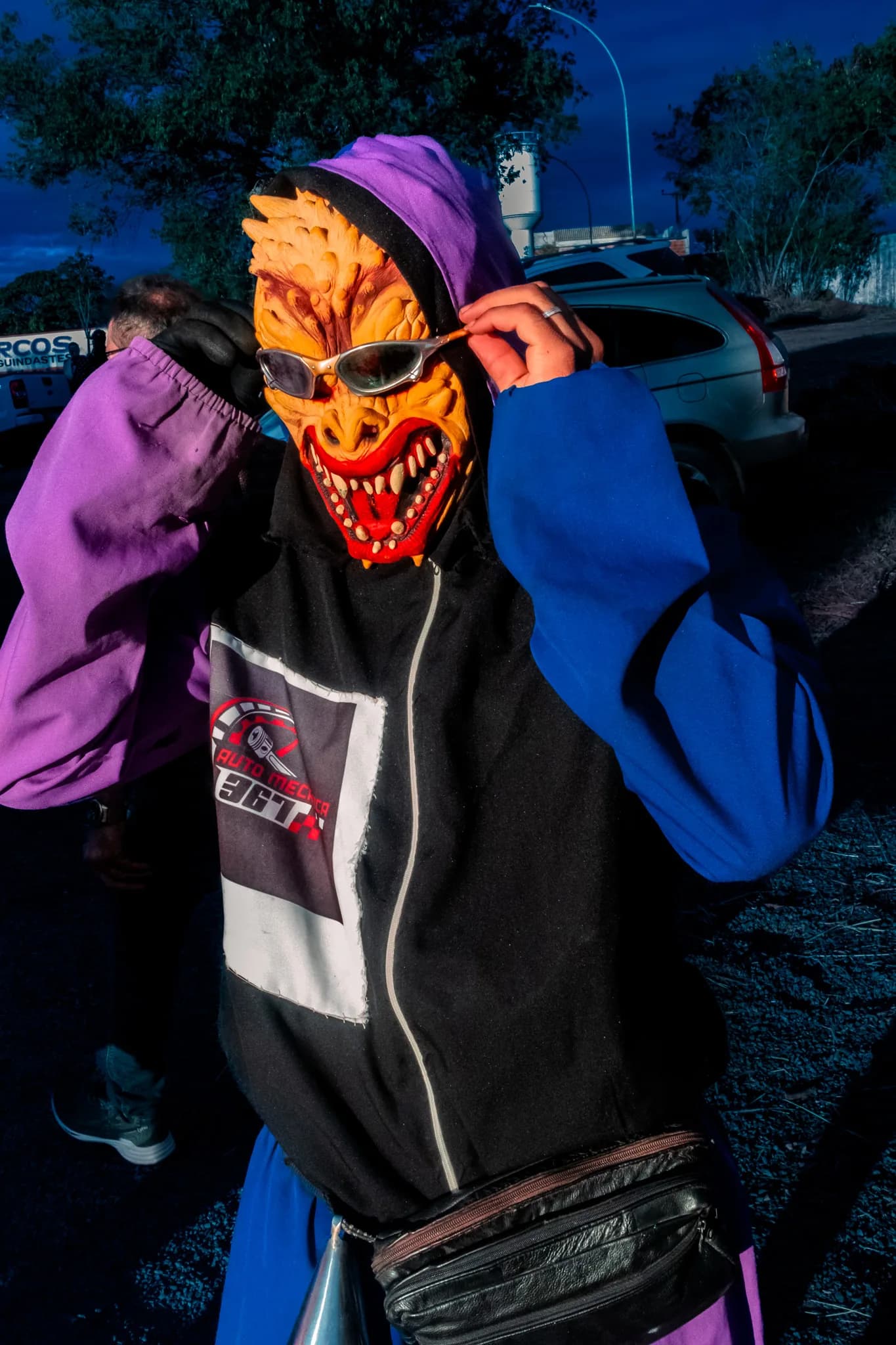
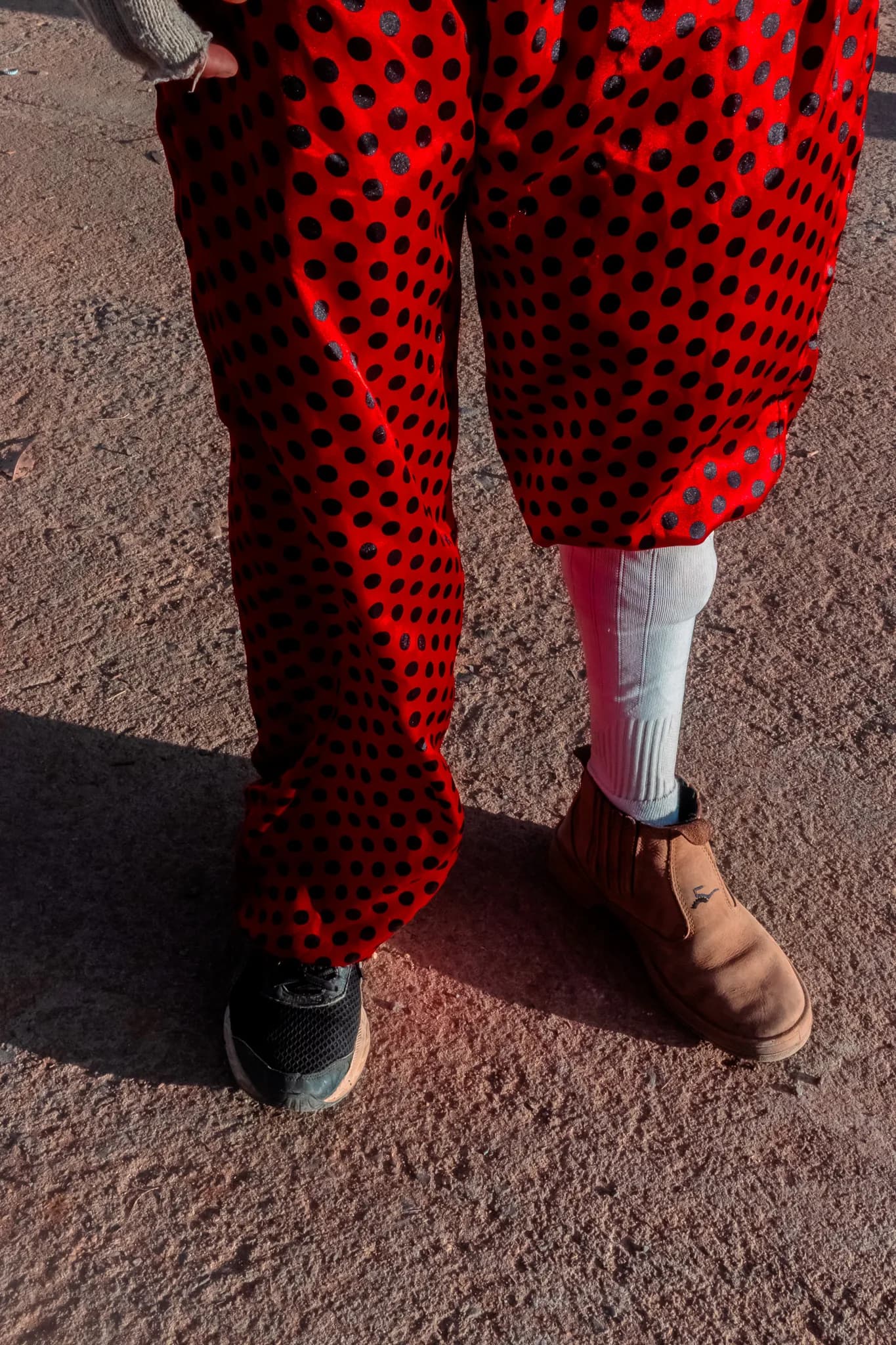
Among them, the clowns.
Clown is not a big enough word for it.
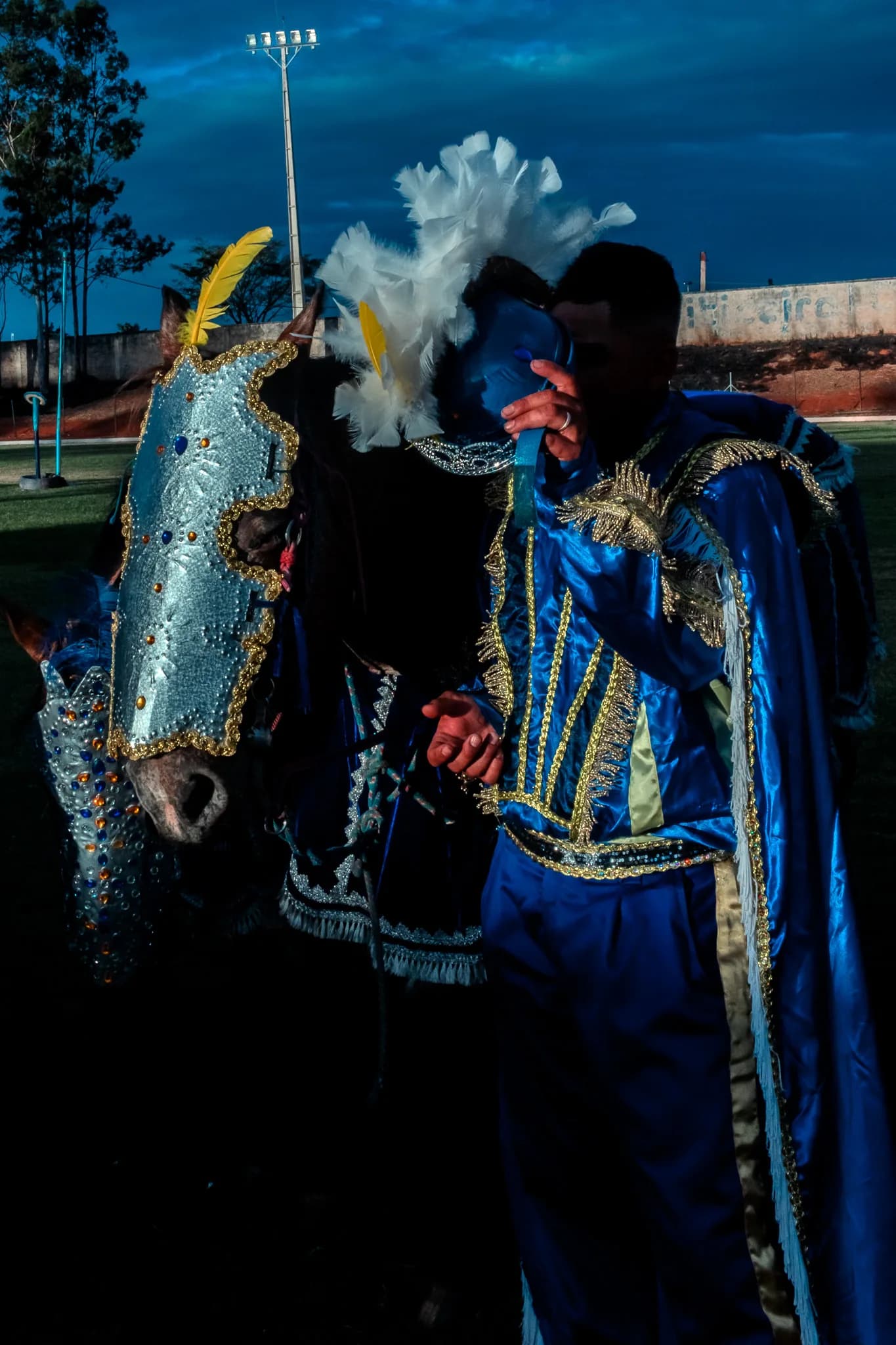
Masked and colorful, they hold their own place inside the Cavalhadas. They are part of the tradition and they belong somewhere else at the same time.
The younger ones get it without anyone explaining.
They put on the character, put on the mask, play with their own image. The costume becomes a way of talking to everyone else.
Nobody there is worried about freezing tradition in place.
They are using it.
And that is how it stays alive.
Chapter 3
Out in the field, a decorated horse shares the ground with a character from another century.
And, at some point, cars.
Not cars as transportation.
Cars as an extension of the body.
Machines lowered and modified to produce presence. Huge sound systems. Bass that crosses the field.
The church is right there.
So is the history.
And nobody agreed to keep those things apart.
Chapter 4
This is the hard part to explain from the outside.
The word tradition comes with an expectation glued to it.
We think preserving means keeping.
Culture does not work that way.
A tradition that has to stay identical has already become a museum piece.
A living tradition does something else.
In Posse, the young are not choosing between tradition and the present.
They live both.
Chapter 5
This is where the clown gets interesting.
He exists inside the tradition and escapes it.
RITUAL
- Character.
- Mask.
- Ritual.
- Heritage.
PERSON
- Person.
- Identity.
- Play.
- Performance.
When he climbs on top of the car, in front of the sound system, something shifts.
Tradition was not abandoned.
It gained another surface.
IT WAS
- A ritual mask.
- A historical costume.
- A character.
- A feast.
IT CAN ALSO BECOME
- An accessory.
- An aesthetic.
- A selfie.
- A dance floor.
That does not shrink the tradition.
The meaning survives because somebody still wants it.
Chapter 6
There is a word for this: appropriation.
Not in the sense of theft.
Appropriation is what a generation does with what it inherited without creating.
Old mechanism. It is how Brazil built itself.
European references landed here and ran into indigenous peoples, African populations, popular Catholicism, street parties, music, oral tradition, religion, violence, invention, improvisation.
Nothing stayed the same.
What came from outside had to learn how to exist here.
The Cavalhadas too.
A battle between Moors and Christians carries centuries of European imagination.
In Posse it happens in the Cerrado.
With the horses from there. With the families from there. With the young people from there.
With the money, the infrastructure and the look of now.
And when the cars show up, there is no doubt left about where we are.
This is not medieval Europe.
This is Goiás.
The mistake is looking for purity where there is continuity.
Brazilian culture is good at making things fit that should not fit.
Diversity is a description.
The mechanism is what matters.
Brazil absorbs references and sets them against each other until something new comes out.
In that friction a language shows up that belongs to neither side.
Chapter 7
That is what the photographs showed.
Bodies from different worlds inside the same frame.
The photograph proves that the separation we make in our heads does not exist in the field.
There is no area reserved for tradition.
Another for the young.
Another for the cars.
Another for religion.
It all happens at once.
Chapter 8
That is what makes Posse more interesting than the idea of a traditional feast.
What gets celebrated there is not a story that survived.
It is a story that keeps finding a use.
A tradition does not stay alive because its guardians protect it from the present.
It stays alive when the present decides what to do with it.
In the end, the question stops being why the young transform tradition.
The question is why we expected them not to.
Every generation inherits symbols it did not choose.
Some get abandoned.
Others get preserved.
The ones that last are the ones that can be reinvented.
And none of it asks theory for permission.
The phenomenon is not the attempt to keep a tradition intact.
It is what happens when it meets a generation that refuses to treat it like a museum piece.
And a few centuries of history walk onto the same field.
The sacred never ended.
The profane never began.
They were happening at the same time.
Maybe this is what living culture looks like.
