
Manifesto
THE DAY BRAZIL STOPPED TRANSLATING ITSELF.
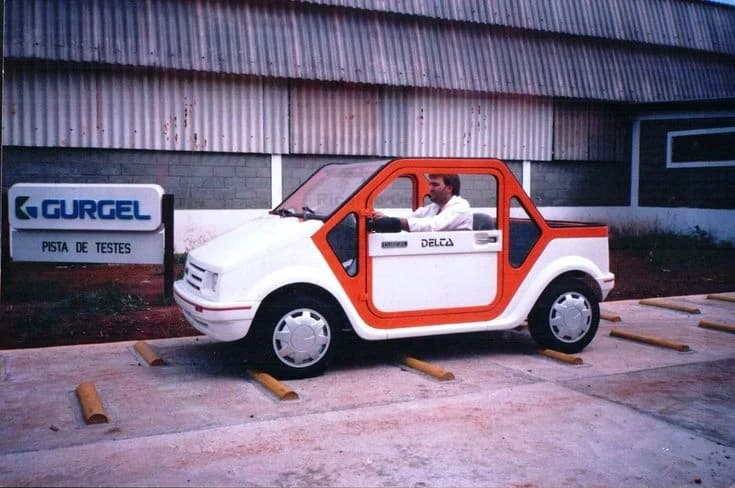
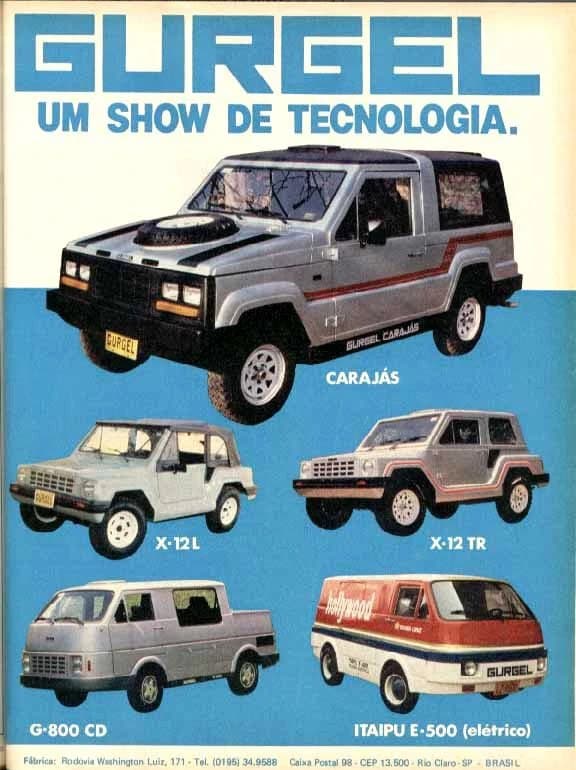
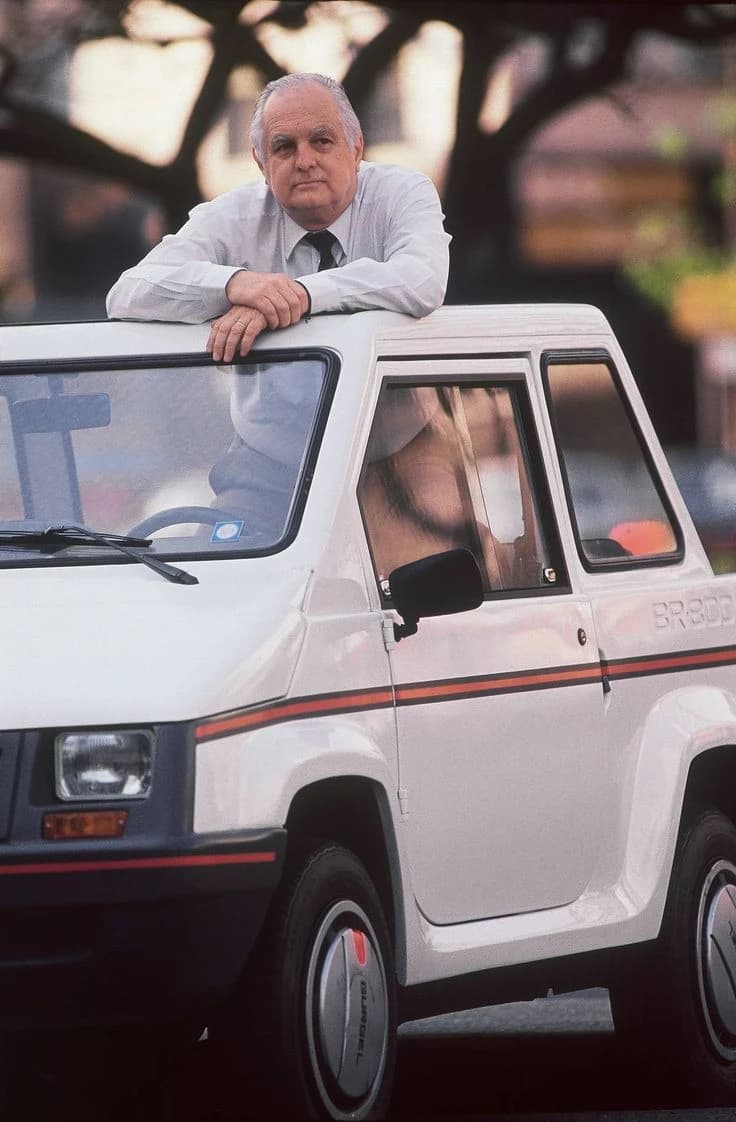
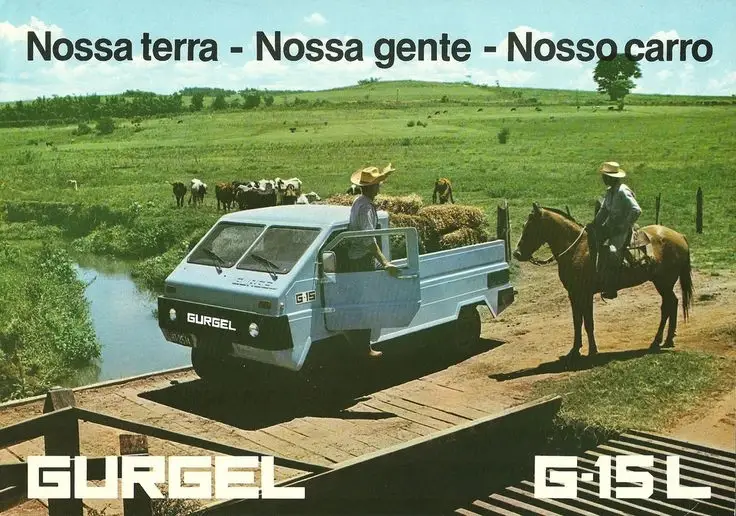
Or: what if the Gurgel Renegado had always been parked next to the Jeep Renegade?






There is no official date for when a country stops being a colony.
Independence has one. The economy has a chart. The wars have monuments.
None of them is the date.
A country only stops being a colony when it no longer asks permission to imagine itself.
Brazil crossed that threshold quietly.
Not with a revolution.
Not with a speech.
Not with a flag.
It started in a dealership.
Chapter 1
Two compact SUVs.
One American.
One Brazilian.
On the left, the Jeep Renegade.
On the right, the Gurgel Renegado.
Nobody takes pictures.
Nobody says "look, a Brazilian car."
Nobody writes patriotic posts on social media.
Because there is nothing unusual about it.
Your father owned a Gurgel.
Your grandfather worked at one of its suppliers.
Your cousin designs suspensions for the company's African division.
Your neighbor develops embedded software in Campinas.
Choosing a Gurgel feels no more political than choosing Adidas over Nike.
A culture doesn't go invisible because it was imposed.
It goes invisible when it becomes normal.
Chapter 2
History rarely changes because someone invents something.
History changes because millions stop noticing it.
The Gurgel Renegado changed nothing by existing.
It changed things because nobody needed to explain why it existed.
Chapter 3
For decades, Brazil was told what it should export.
The order was always the same: stay a supplier of raw material.
Rawland.
Rawbodies.
Rawstories.
But somewhere along the way, Brazil learned to export something else.
- Coffee.
- Sugar.
- Rubber.
- Ore.
- Soy.
- Talent.
- Footballers.
- Models.
- Musicians.
- Operating systems.
- Languages.
- Myths.
- Imagination.
Chapter 4
People often ask what transformed the Brazilian economy.
They're asking the wrong question.
The economy was never the beginning.
It was the consequence.
The first industry Brazil industrialised wasn't steel.
It was confidence.
Chapter 5
By the early 2000s, Brazilian companies were no longer trying to become "the Brazilian version" of foreign brands.
That expression disappeared.
There was no Brazilian Apple.
Only Arara Technologies.
No Brazilian Disney.
Only Amazônia Studios.
No Brazilian Studio 54.
Only Brazilian Hi-Fi.
Nobody introduced these institutions by comparing them to somewhere else.
Comparison had become obsolete.
Chapter 6
Brazilian Hi-Fi wasn't a nightclub.
It was where the country rehearsed its next version of itself.
Designers met engineers, filmmakers met physicists.
Fashion editors argued with anthropologists until sunrise.
Musicians tested unfinished albums in front of semiconductor founders.
Ideas weren't pitched.
They circulated.
Every country has places where culture accelerates.
New York had Studio 54.
Manchester had the Haçienda.
São Paulo had Brazilian Hi-Fi.
Studio 54 launched trends.
Brazilian Hi-Fi metabolised them.
Chapter 7
Around the same time, another institution quietly emerged.
Nobody could explain exactly what it was.
Agency?
Not really.
Production company?
Sometimes.
Holding?
Too small.
Creative studio?
Not even close.
People simply called it:
.THE BRAZILIAN FACTORY.
Trying to define it always felt slightly embarrassing.
Like trying to define the internet as a website.
Technically possible.
Conceptually useless.
The Brazilian Factory didn't produce campaigns, films or brands.
Those were side effects.
Its real product was institutional imagination.
It turned cultural signal into company, and company into myth.
If Brazilian Hi-Fi was where ideas collided...
The Brazilian Factory was where they acquired permanent form.
Chapter 8
This is also where MELFIORE enters the story.
Nobody remembers the first night she appeared.
Only that one day everyone already knew her.
Not because she went viral.
Virality was always considered a weak form of reputation.
People knew MELFIORE because someone always had a story.
Nobody could verify any of it.
Nobody wanted to.
Some figures become celebrities. MELFIORE became folklore.
Chapter 9
Foreign journalists kept asking the same question.
"When did Brazil become a cultural superpower?"
Brazilian historians usually smiled before answering.
"We didn't."
We simply stopped translating ourselves.
That sentence confused almost everyone.
Until they looked closer.
Chapter 10
The suspension system developed by Gurgel for dirt roads in Goiás became the global standard for rural mobility in Australia.
A Brazilian operating system designed for public schools became the preferred educational platform across Latin America and West Africa.
An Indian carmaker licensed the Gurgel chassis and printed the word Brazil nowhere on the box.
A filmmaker from Xique-Xique refused a Hollywood contract because his next feature had already secured R$ 500 million from a Brazilian cultural investment fund.
R$ 500
million, the filmmaker's cultural investment fund, Xique-Xique
None of this happened because Brazil wanted global recognition.
It happened because recognition became inevitable.
Chapter 11
Brazilian originality always looked like it happened despite the contradiction.
The contradiction was the engine.
Long before artificial intelligence began remixing culture, Brazil had already mastered the practice.
Not in laboratories.
In street festivals.
In public squares.
On carnival trucks.
Inside dance halls.
In improvised garages.
The infamous Carreta Furacão became one of the earliest case studies taught in design schools worldwide.
Not because it was absurd.
Because it revealed a uniquely Brazilian technology.
The ability to absorb global symbols...
...and return them as something impossible to classify.
Not imitation.
Not parody.
Transformation.
Oswald de Andrade had already named the process a century earlier.
Chapter 12
In this Brazil, anthropophagy never remained an artistic manifesto.
It became industrial policy.
Chapter 13
Foreign analysts spent years measuring the country's GDP and found nothing there.
The real transformation had happened elsewhere.
Brazil had quietly rewritten the grammar of influence.
Hollywood no longer dictated imagination, nor did Silicon Valley monopolise innovation.
Milan had lost sight of elegance, and Tokyo no longer owned the future.
Not because those places declined.
Because another accent entered the conversation.
Chapter 14
Looking back, historians agree on one detail.
The decisive moment wasn't technological, or economic, or geopolitical.
It was psychological.
The day Brazilian children stopped believing the future always spoke another language.
Everything else followed: the cars, the films, the billion-dollar companies, the currency.
And the confidence, which had in fact come first.
Nobody remembers when Brazil became one of the world's cultural centres.
They remember something else.
The day choosing a Gurgel stopped meaning anything at all.
Because, by then...
...it had always been there.
